No transfers from Tokyo Station — about 2 hours 31 minutes seated all the way to the Ikaho Stone Steps.
Highway bus boarding report: Tokyo Station to Ikaho Onsen
Boarding the "Joshu Yumeguri" bus from the terminal at Tokyo Station’s Yaesu South Exit gets you all the way to the Ikaho Stone Steps with no transfers. The biggest draw was not having to haul large luggage between trains and local buses.
This time we rode the Joshu Yumeguri No. 303, departing at 9:10 am. Here is the trip step by step: finding the boarding stop, the mobile ticket, onboard facilities, the rest stop at Kamisato Service Area, and arrival at the Ikaho Stone Steps at 11:41 am.
What we learned on this trip
Board at Tokyo Station’s Yaesu South Exit / No transfers to the Ikaho Stone Steps / About 2 hours 31 minutes total / About 15-minute rest stop at Kamisato SA / Onboard restroom, USB power, and free Wi-Fi
Departing Tokyo Station at 9:10 am on the Joshu Yumeguri No. 303
We had previously used the highway bus from Busta Shinjuku, but this time we booked the "Joshu Yumeguri No. 303," which leaves Tokyo Station at 9:10 am. It runs from the Yaesu South Exit straight through to Ikaho Onsen (Stone Steps Street) with no transfers, and thanks to good road conditions we arrived almost exactly on schedule.
Route name: Joshu Yumeguri No. 303
Operator: JR Bus Kanto
Departure: Tokyo Station (Yaesu South Exit), 09:10
Rest stop: Kamisato Service Area, about 15 minutes
Arrival: Ikaho Onsen (Stone Steps Street), 11:41
Travel time: About 2 hours 31 minutes
Seating: 4-across seats / onboard restroom
Ticket: Purchased online, mobile ticket
※You can check departure points, times, and seat availability all in one place on Rakuten Travel (Highway Buses).
※For our report on the highway bus from Busta Shinjuku (Shinjuku Station) to the Ikaho Stone Steps, see this article.
After leaving Tokyo Station, this bus continues via Shibukawa and Ikaho Onsen on to Kusatsu Onsen. Once you board at Tokyo Station, you can stay seated all the way to the Ikaho Stone Steps, which makes it an easy route to follow even for first-time visitors to Ikaho.
Booking the mobile ticket with a QR code in advance
We bought the ticket online in advance. The mobile ticket shown after booking includes a QR code, which you simply show on your phone screen when boarding. There was no need to print a paper ticket, which made it convenient to head straight to the bus stop.
Since we rode on a weekday, the bus had quite a few empty seats. That said, it can sell out on weekends, holidays, during the autumn leaf season, and in the hot spring travel season. Once your travel dates are fixed, it is safer to book online in advance rather than buy on the day. If you are using a mobile ticket, it helps to have the QR code ready to display right before boarding.
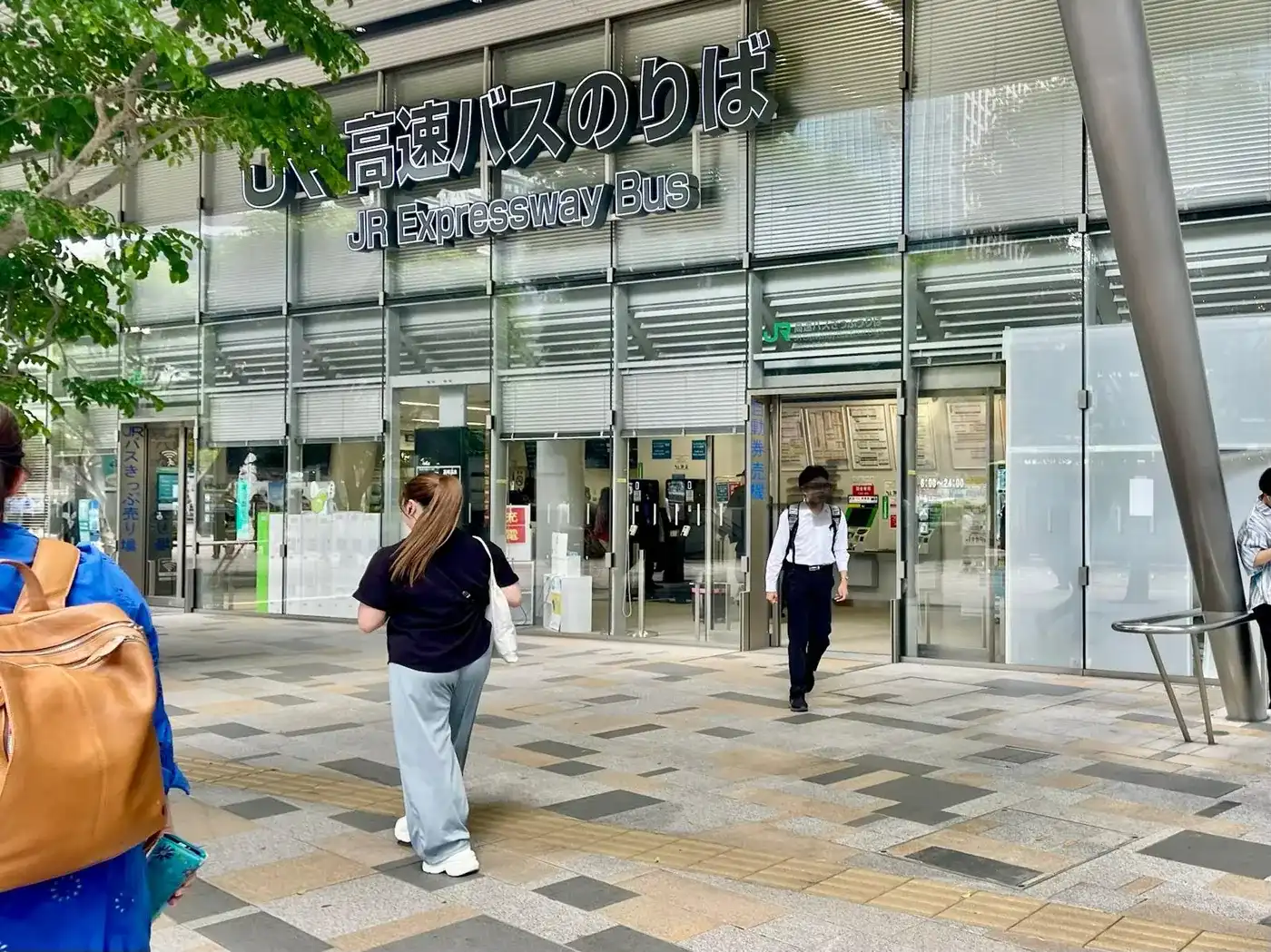
To the JR Highway Bus Terminal at Tokyo Station’s Yaesu South Exit
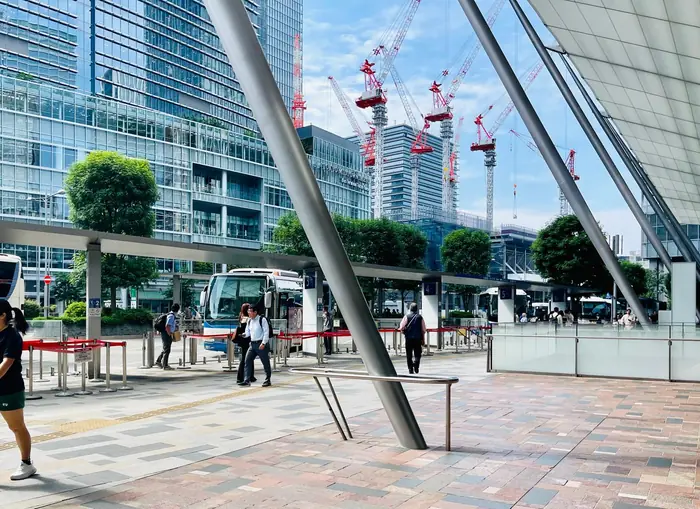
Once you reach Tokyo Station, head for the Yaesu South Exit. Tokyo Station is large, and depending on which line and exit you come from, it can take a while to reach the highway bus terminal. If this is your first time, it is safest to arrive near the Yaesu South Exit about 20–30 minutes before departure.
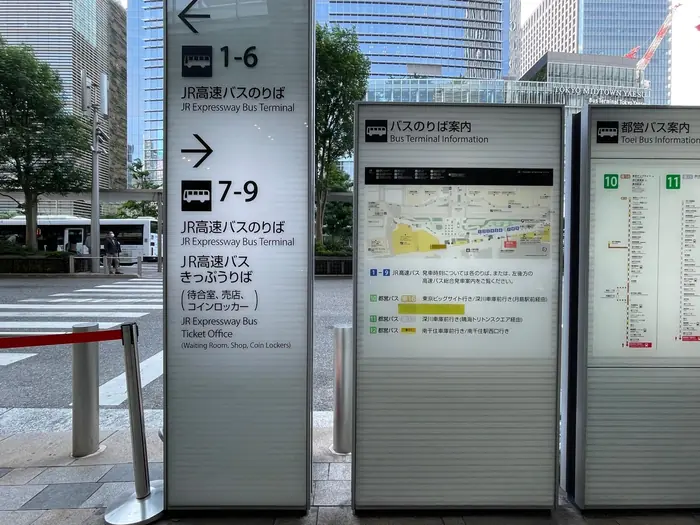
The highway bus terminal at Tokyo Station. Check the signage as you make your way to the boarding bayBay numbers and terminal information display
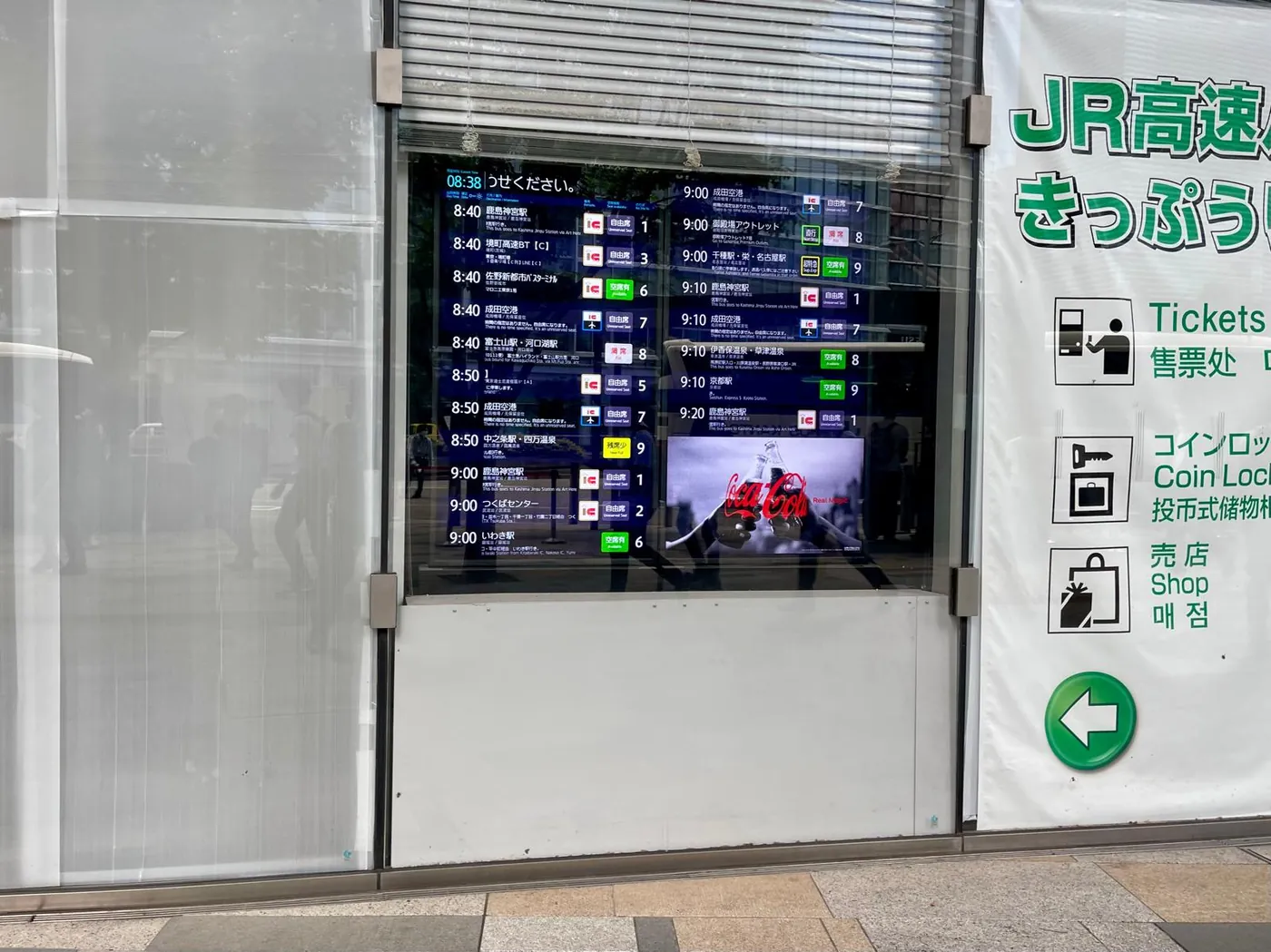
Confirm the route name, time, and bay on the departure monitor
Near the Yaesu South Exit bus terminal there are JR highway bus signs and departure monitors. First, check the destination and bay number for your bus on the monitor. Since several highway buses depart around the same time, it is worth confirming not just "Ikaho Onsen" but also the route name and departure time to avoid boarding the wrong bus.
The departure monitor. Check the route name, departure time, destination, and bay number
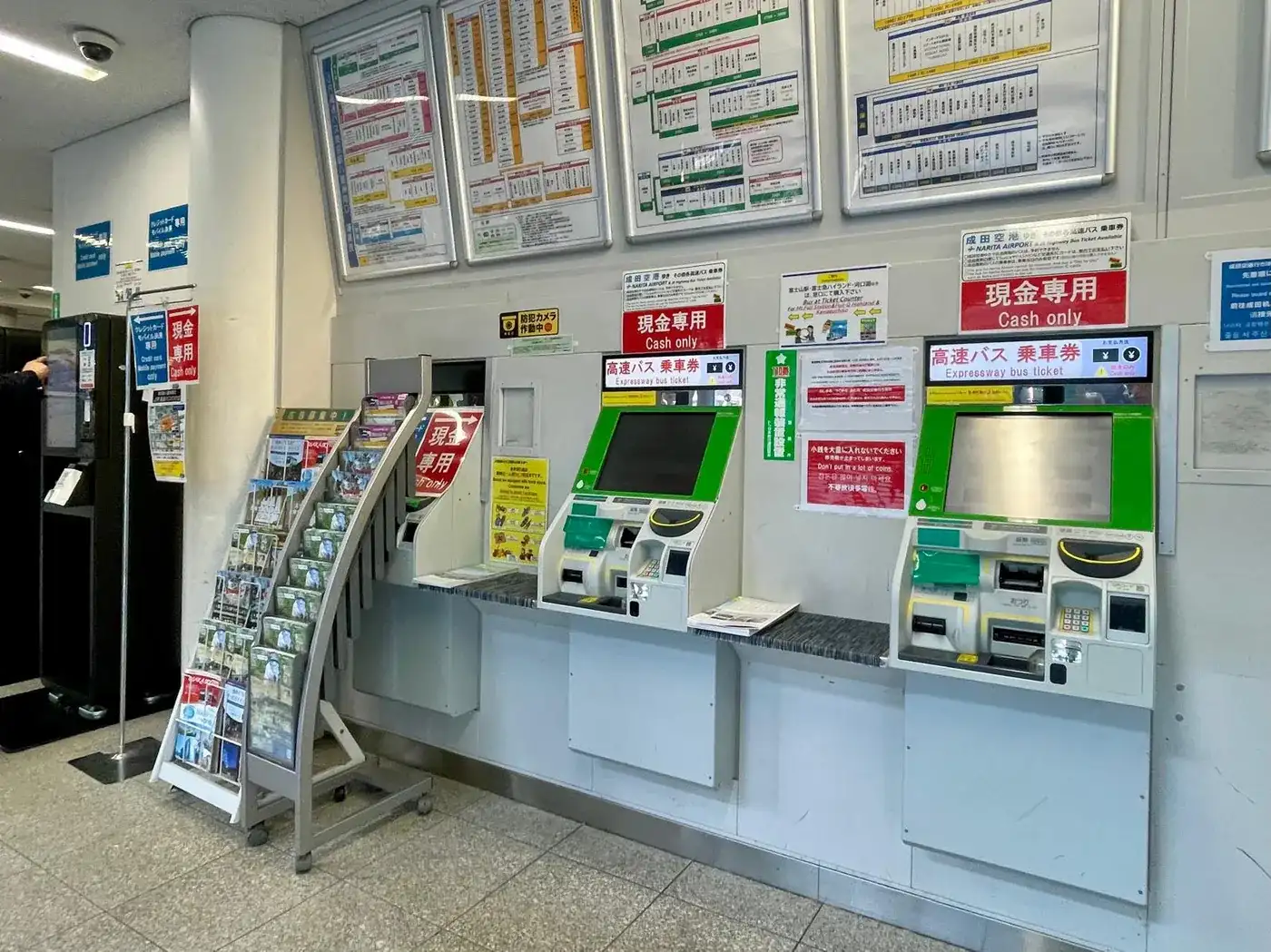
Ticket machines and counters for same-day purchases
There are also ticket vending machines near the highway bus stop at Tokyo Station. Since we had already bought our ticket online, we did not need to use them, but on the day of travel you can also buy a ticket at a vending machine or counter if seats remain. Given the risk of buses selling out, it is more reliable to book in advance once your travel dates are set.
Entrance to the JR highway bus ticket counterThe highway bus ticket vending machines. We used an online ticket this time
Boarding the Joshu Yumeguri: about 2 hours 30 minutes on board
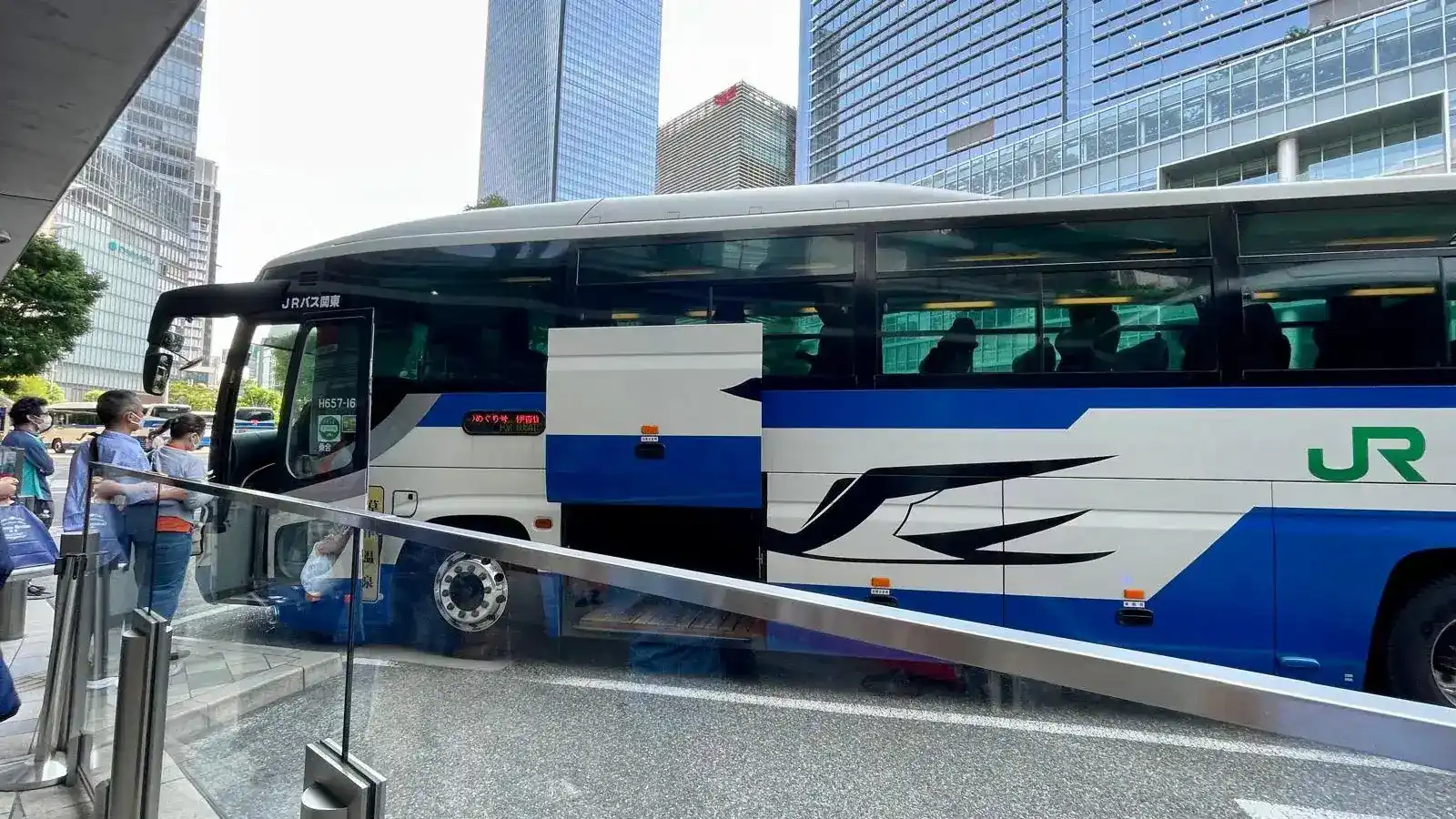
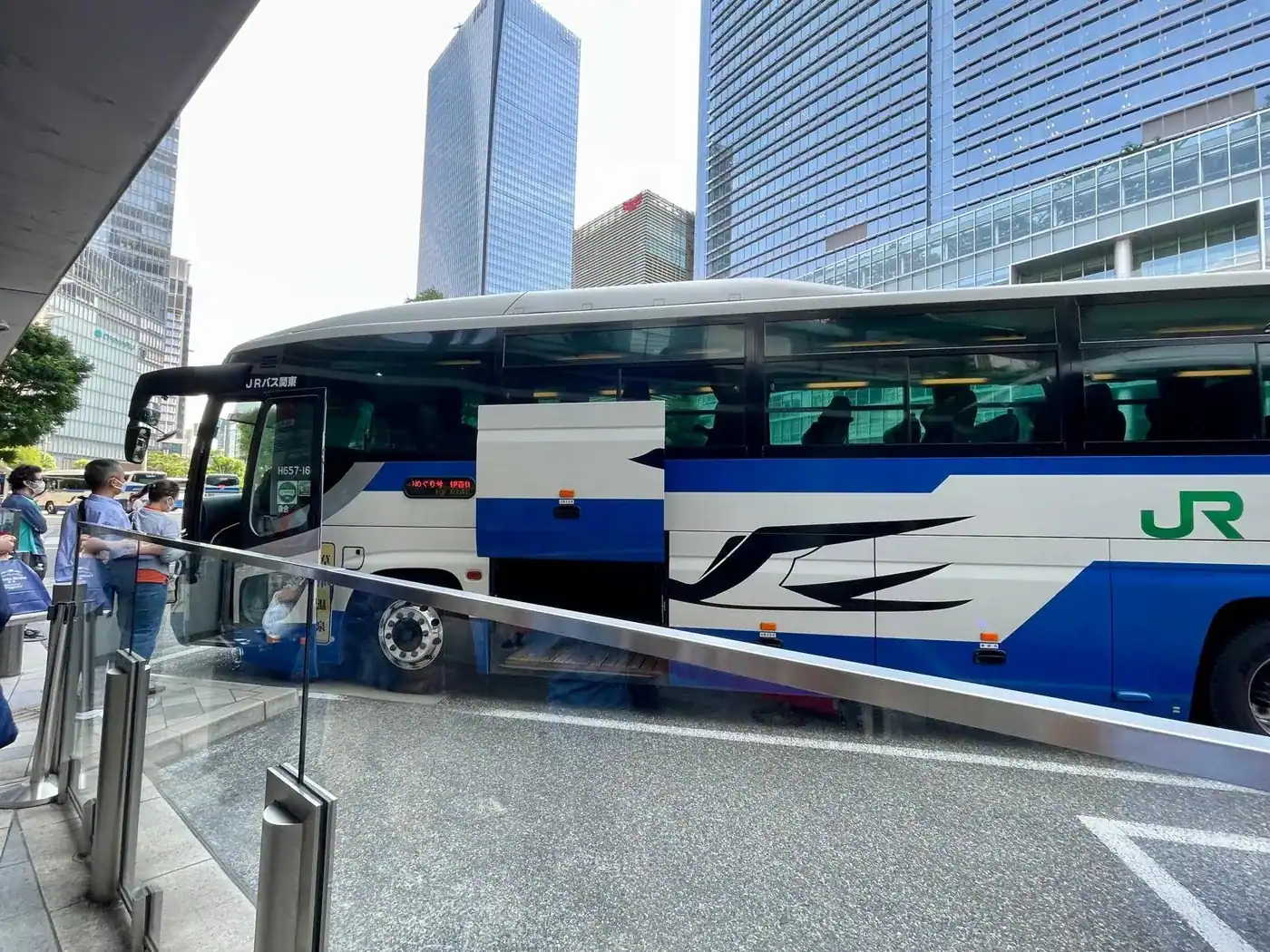
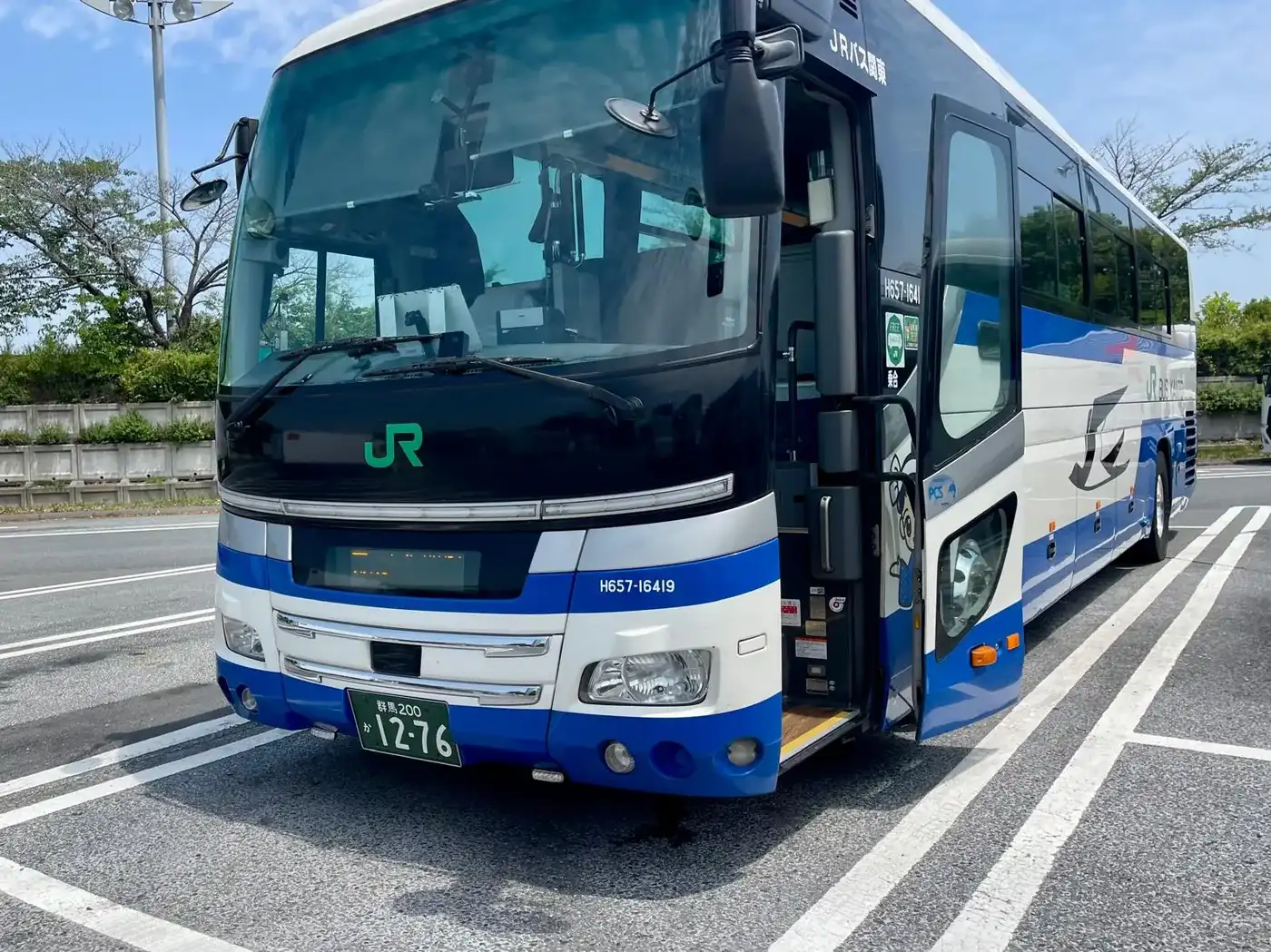
This trip used a highway bus operated by JR Bus Kanto. The bus body is white and blue with the JR logo on the side. When boarding, we showed the QR code from the mobile ticket on our smartphone. Since the screen was already open, boarding took only a moment.
The JR Bus Kanto highway bus bound for Ikaho Onsen and Kusatsu Onsen from Tokyo Station
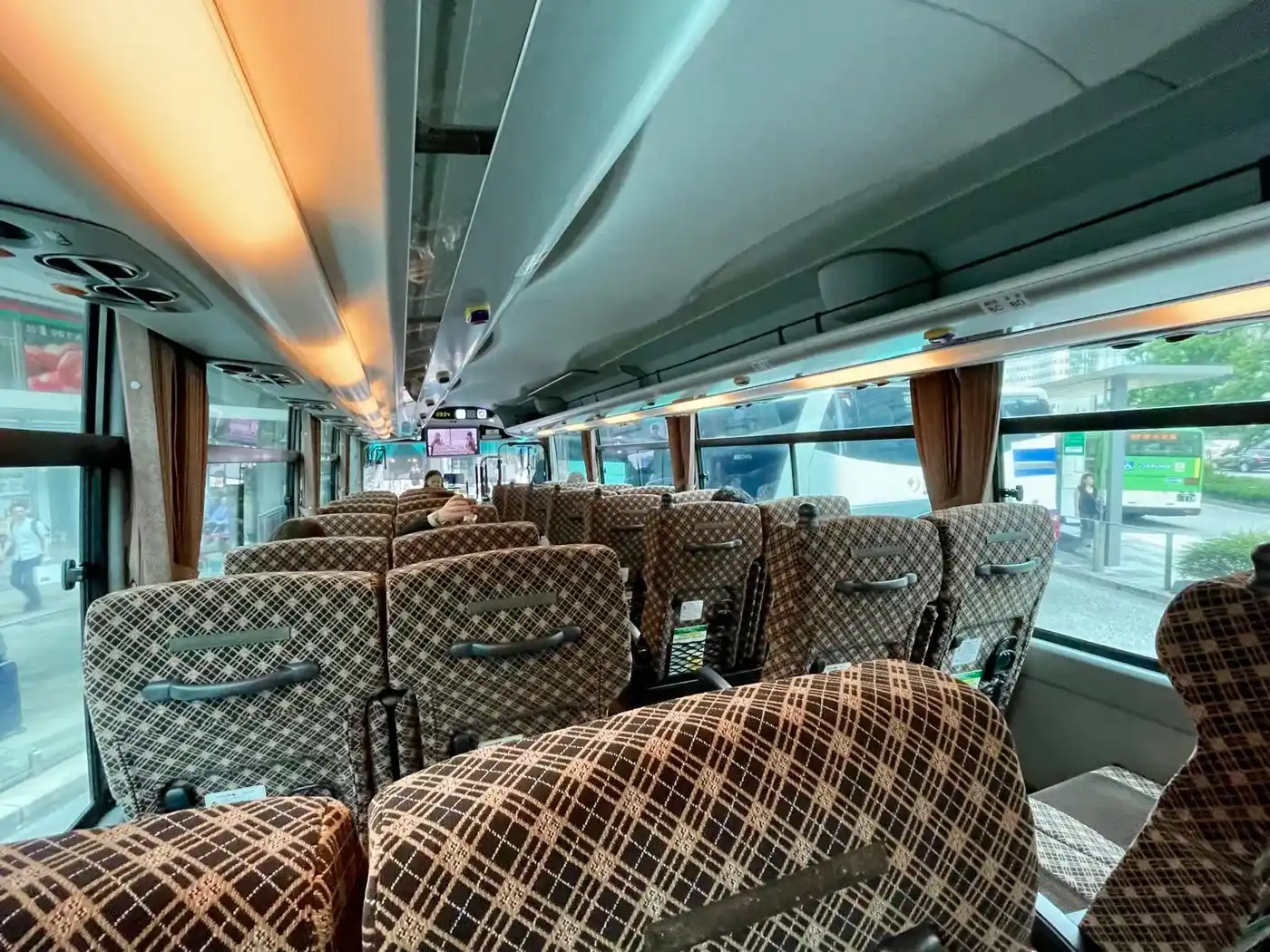
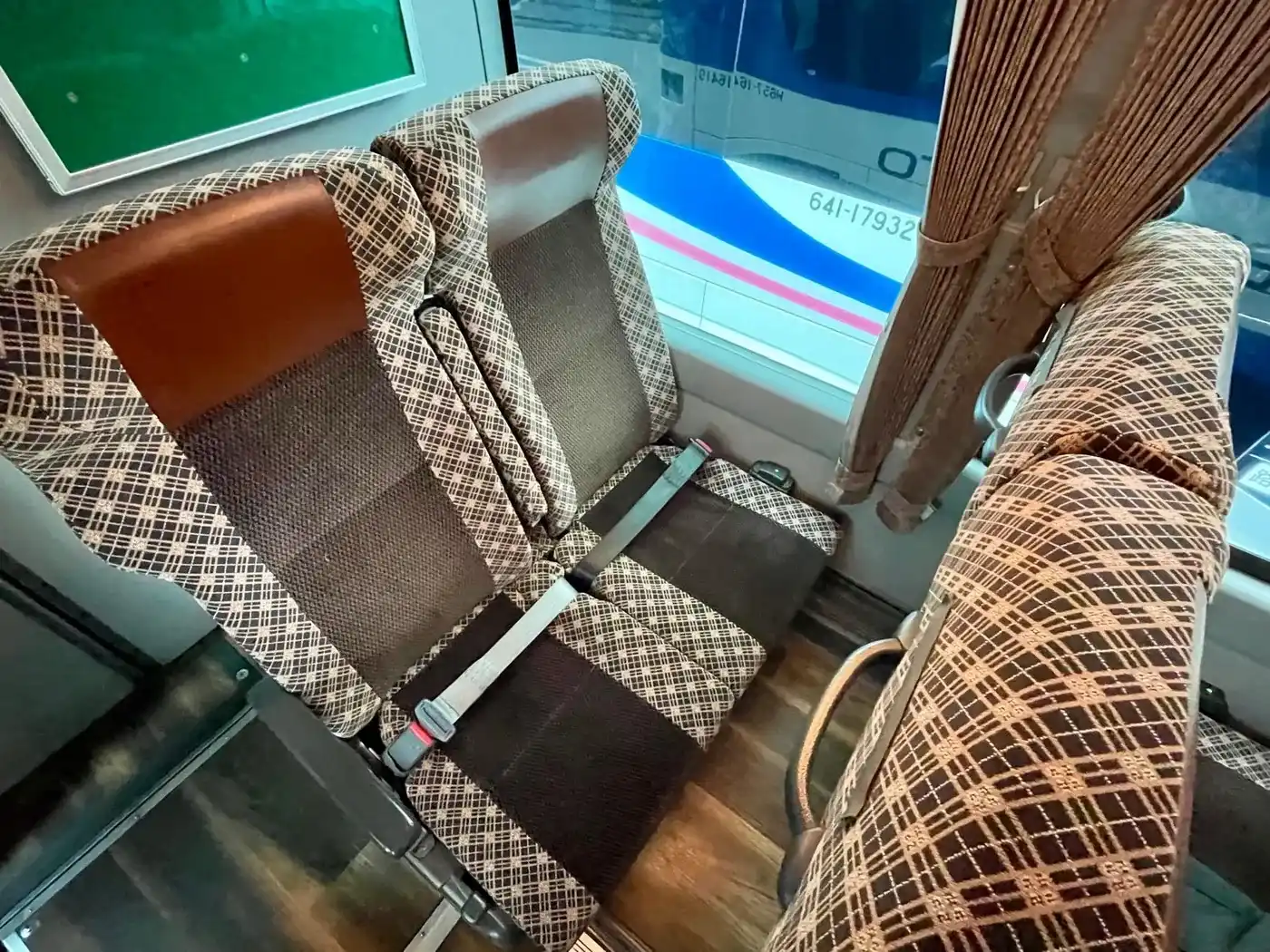
Standard 4-across seating on board
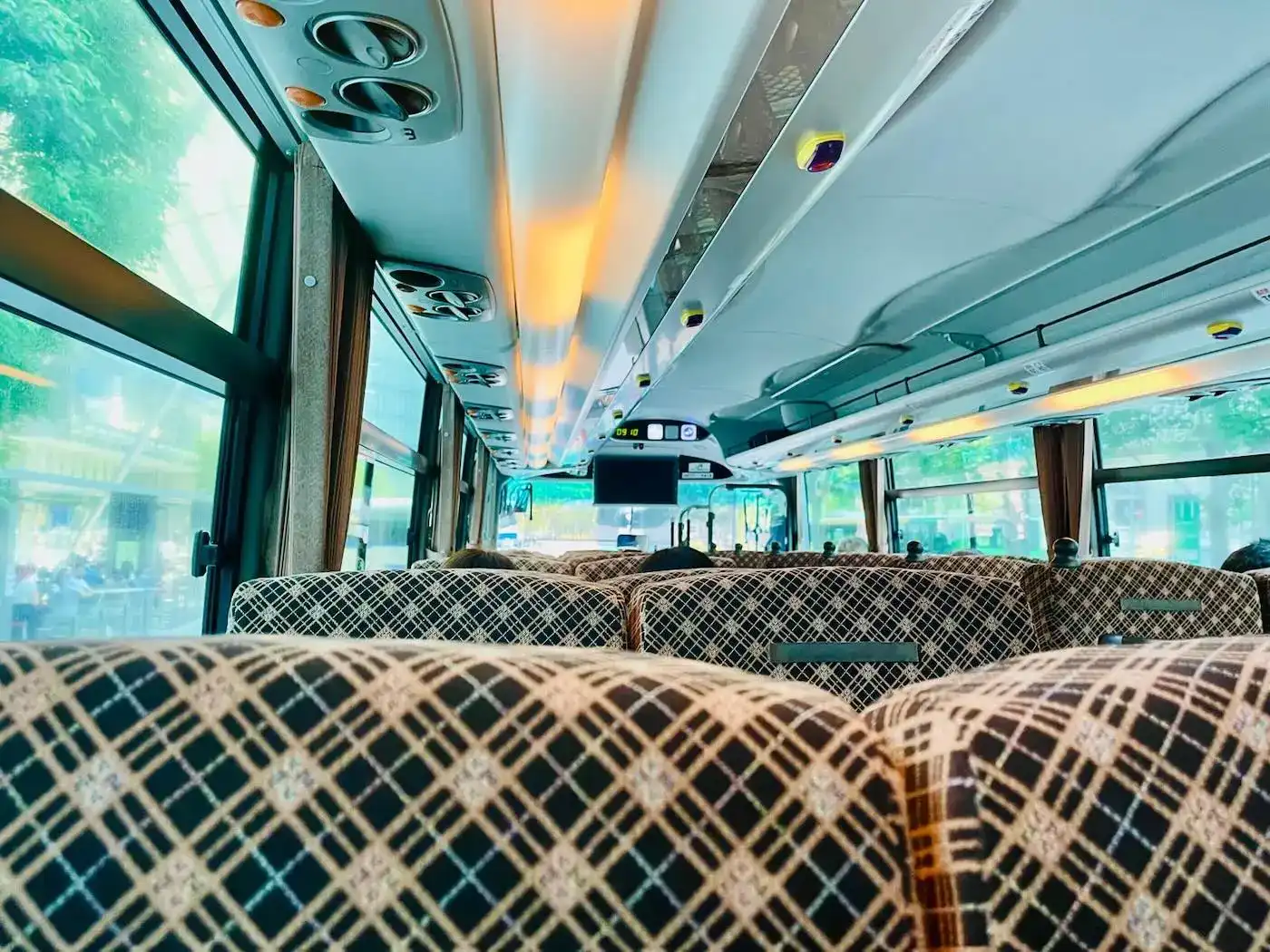
The seating is arranged four across, with two seats on each side of the aisle, laid out much like a typical sightseeing coach, with rows running from front to back. As noted in the booking information, a passenger of the opposite gender may end up seated next to you. If you would prefer to keep the neighboring seat free, or want a roomier seat, it is worth checking at booking time whether a different seat type or departure is available. Since we traveled on a weekday, the bus was relatively empty, and we had a calm, comfortable ride to Ikaho Onsen.
Inside the Joshu Yumeguri bus. Seating is 4 across with a center aisle
Buckle up and have what you need close at hand
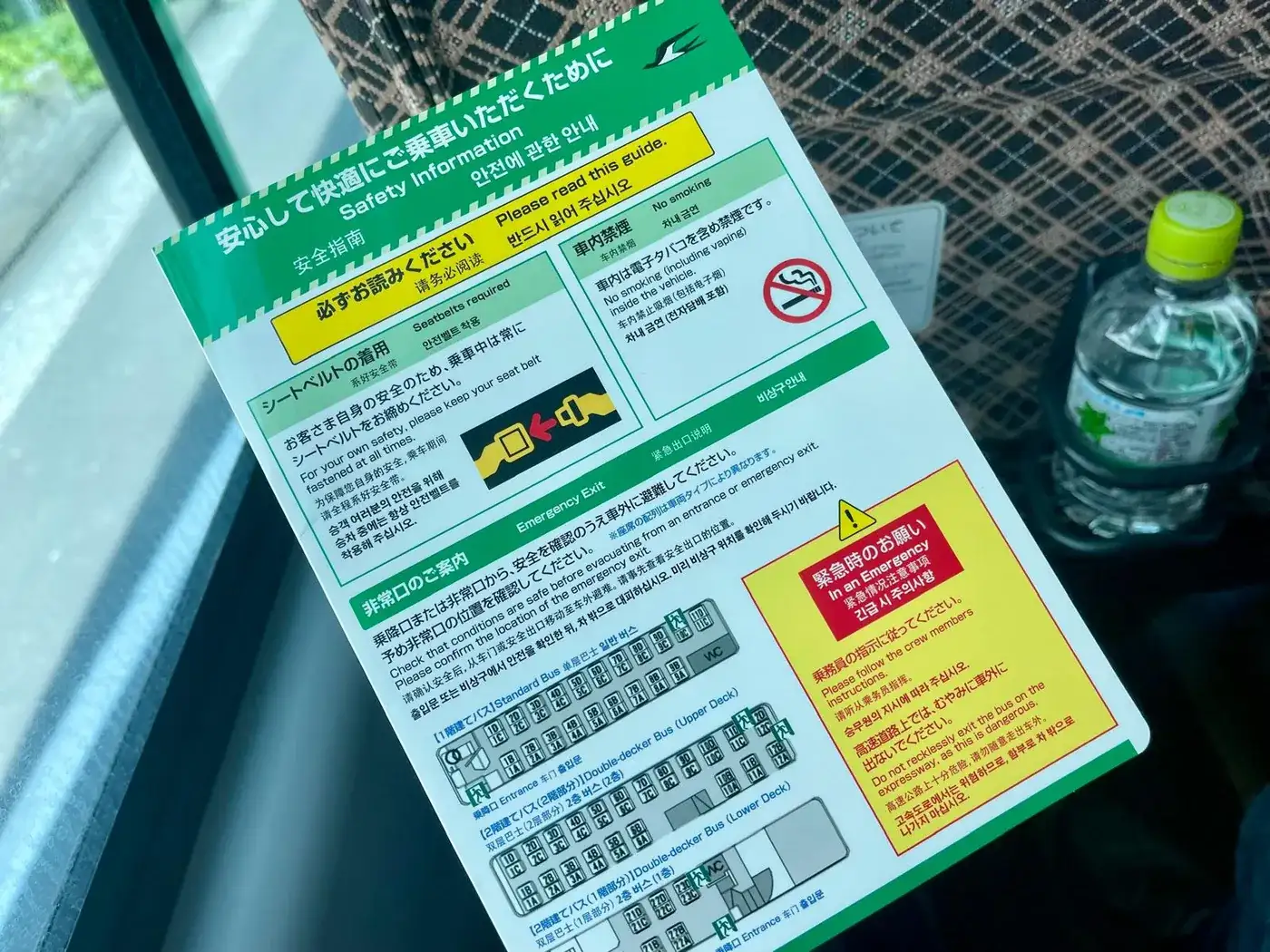
Every seat has a seat belt, which must be worn while the bus is on the highway. The seatback reclines, but if someone is seated behind you, it is courteous to let them know before reclining. Since the ride takes about 2 hours and 30 minutes, it helps to keep a drink and an extra layer close at hand.
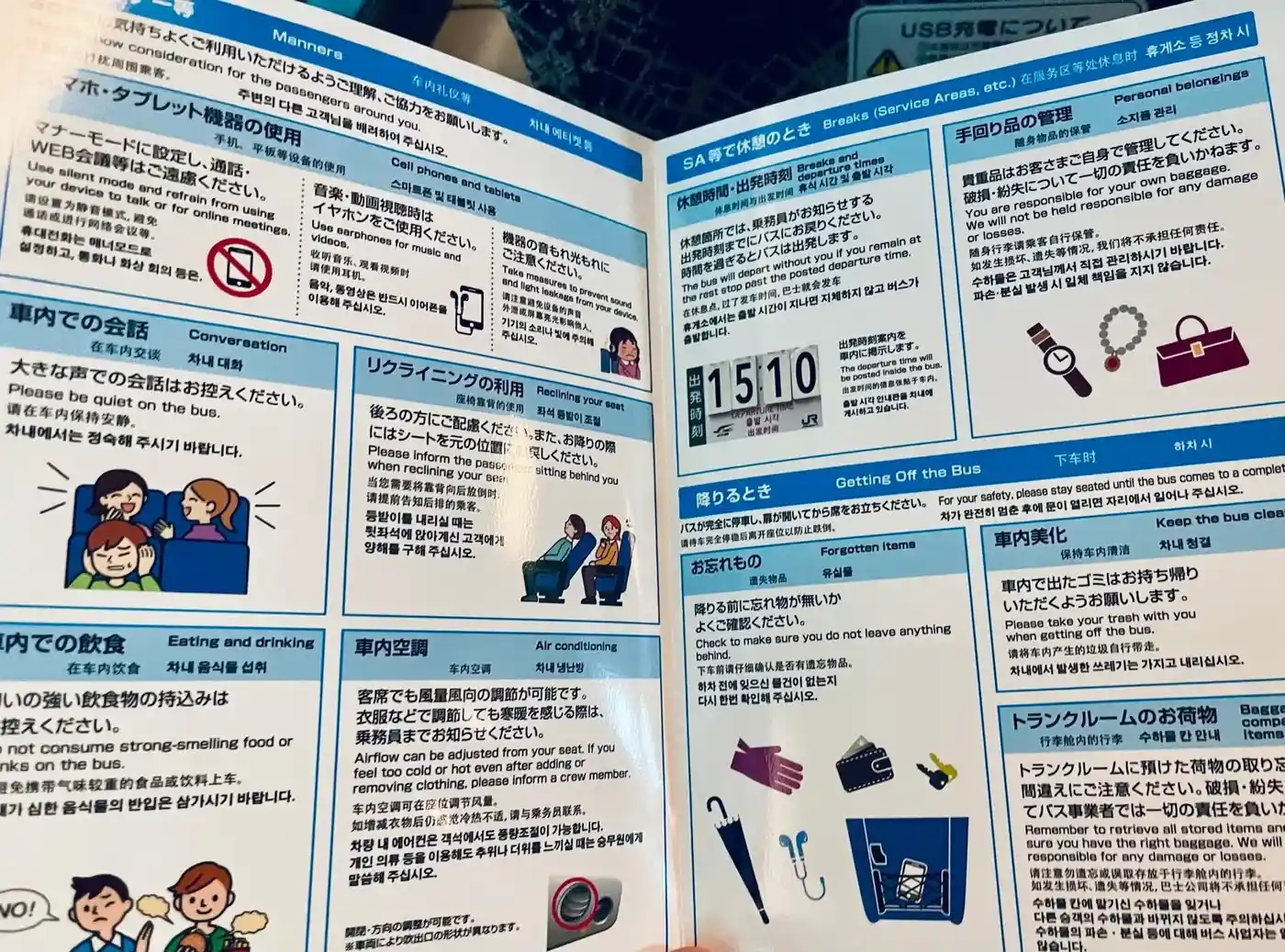
Every seat has a seat belt, worn while the bus is on the highwayA multilingual safety guide card is tucked in the seatback
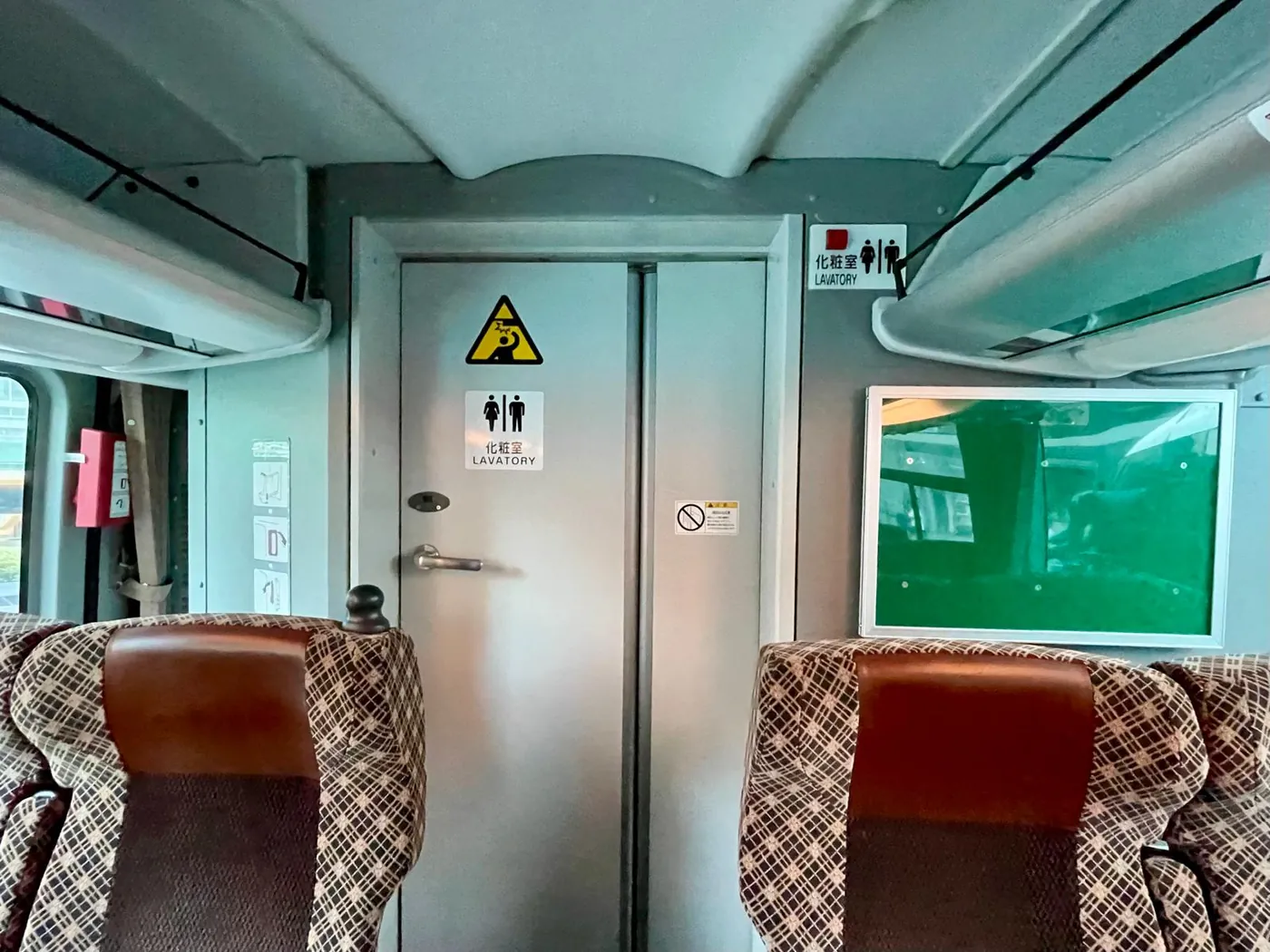
A restroom at the rear of the bus
The Joshu Yumeguri bus has an onboard restroom, located at the rear on this vehicle. The trip from Tokyo Station to Ikaho Onsen takes about 2 hours and 30 minutes, so having a restroom on board is reassuring for a longer ride. That said, the bus can sway while moving, so where possible it is a good idea to use the restroom before departing Tokyo Station or during the rest stop.
The restroom at the rear of the bus, reassuring even on a longer ride
USB power and free Wi-Fi on board
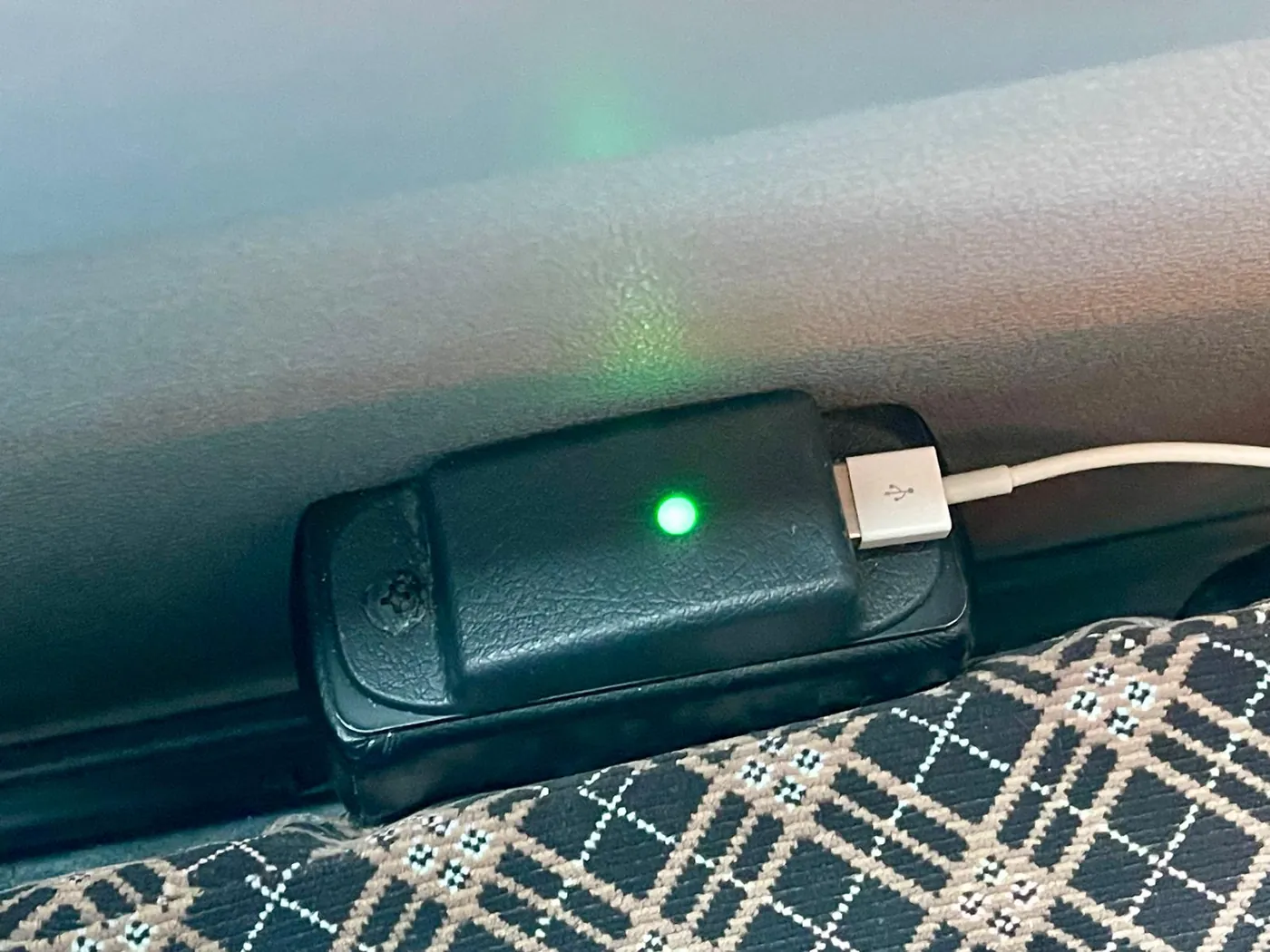
USB power outlets for charging smartphones were installed near the seats. If you plan to use a mobile ticket, it pays to keep an eye on your phone battery. Beyond charging fully before boarding, it is reassuring to make use of the onboard USB outlets or a portable battery. Since the location and type of charging outlet can vary by vehicle, check around your seat once you are on board.
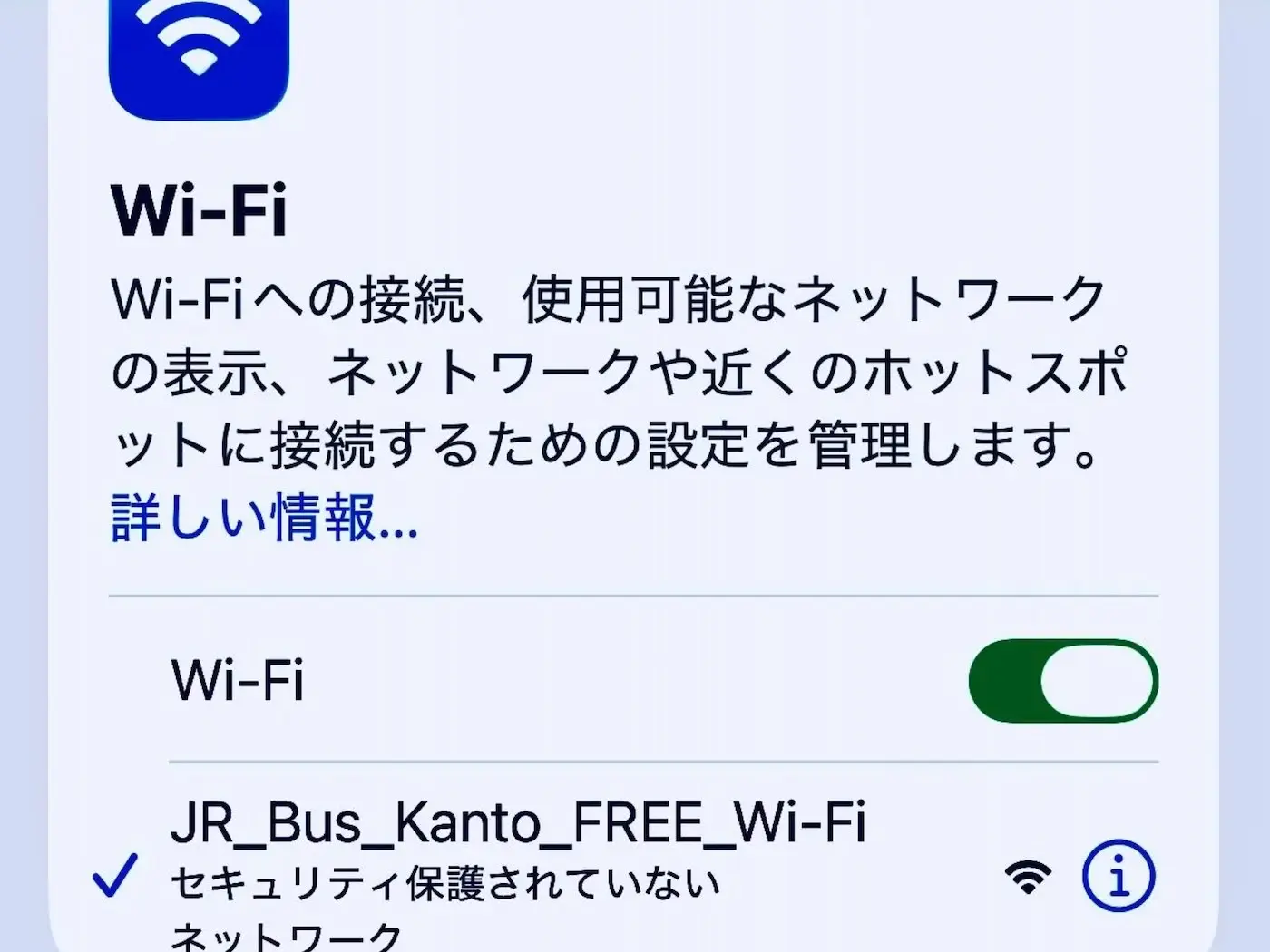
We were also able to connect to JR Bus Kanto’s free Wi-Fi. Open the Wi-Fi settings on your smartphone and select "JR_Bus_Kanto_FREE_Wi-Fi." Being online during the trip is handy for looking up sightseeing information on Ikaho Onsen or checking your plans after arrival. That said, the connection can become unstable depending on where the bus is on the highway and the signal conditions, so it is better suited to browsing websites and sending messages than to streaming video.
A USB outlet installed near the seat, for charging your phone on the moveWe were able to connect to "JR_Bus_Kanto_FREE_Wi-Fi" on board
From Tokyo’s skyline to the mountains of Ikaho
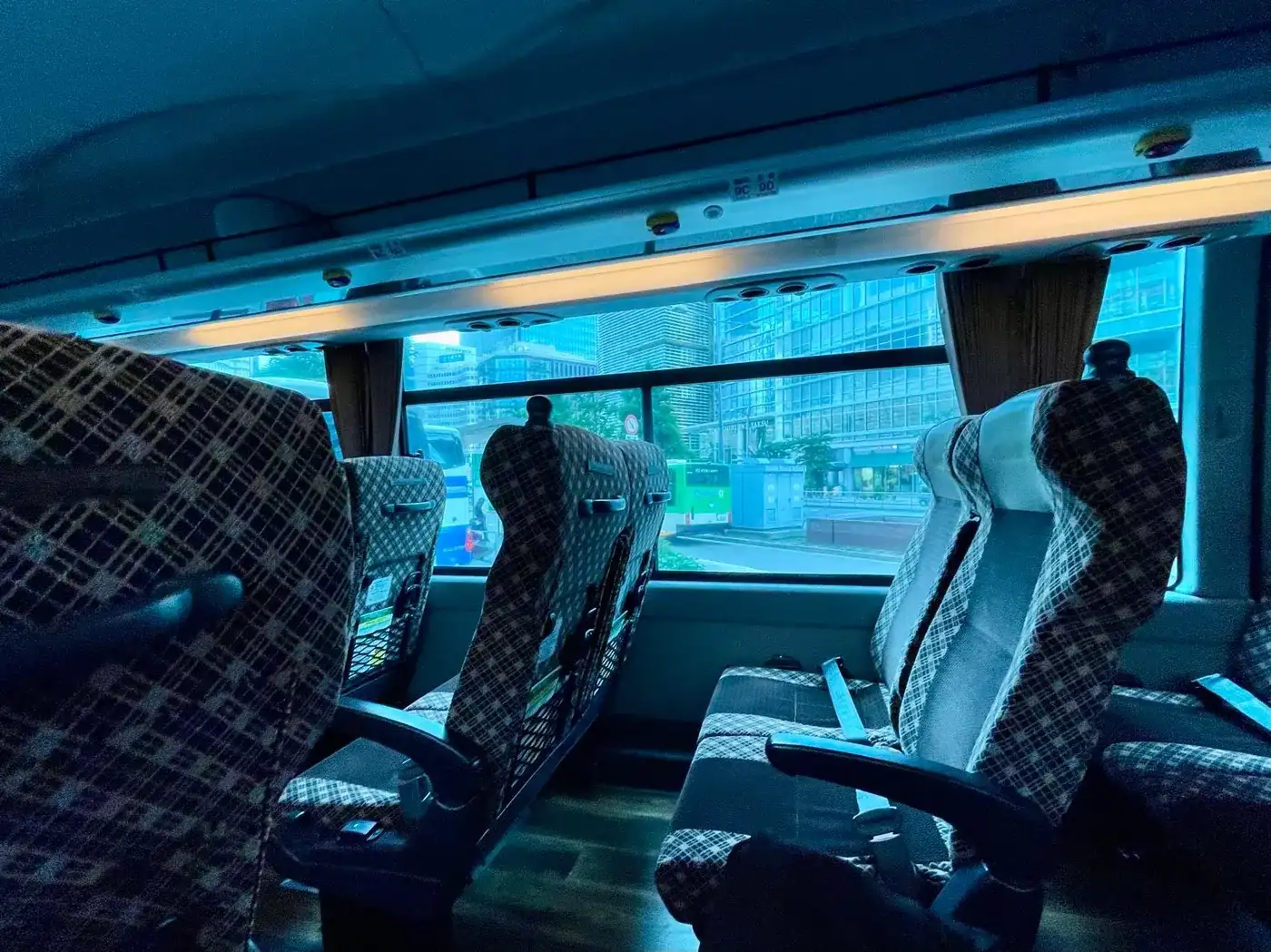
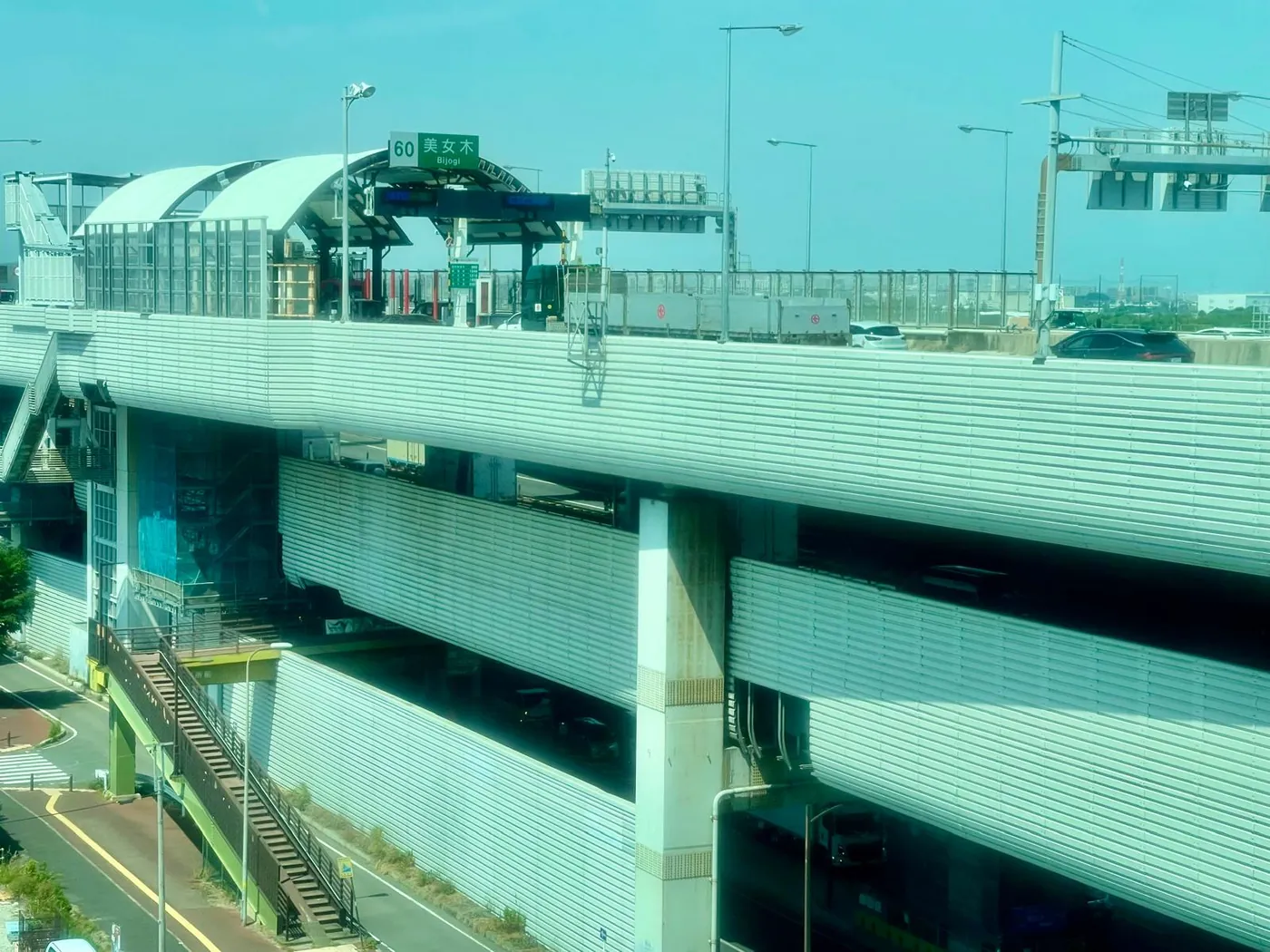
Right on schedule at 9:10 am, the bus pulled out of Tokyo Station. It wound through downtown past the high-rises around the station before entering the highway. Because there are no transfers, one of the biggest advantages of the highway bus is that once you board, you can stay seated all the way to Ikaho Onsen. Taking the Shinkansen would mean transferring at a station such as Takasaki or Shibukawa, but the highway bus takes you directly from Tokyo Station to the Ikaho Stone Steps.
The cityscape around Tokyo Station, seen from inside the bus right after departureAfter crossing downtown, the bus continues onto the highway
A roughly 15-minute rest stop at Kamisato Service Area
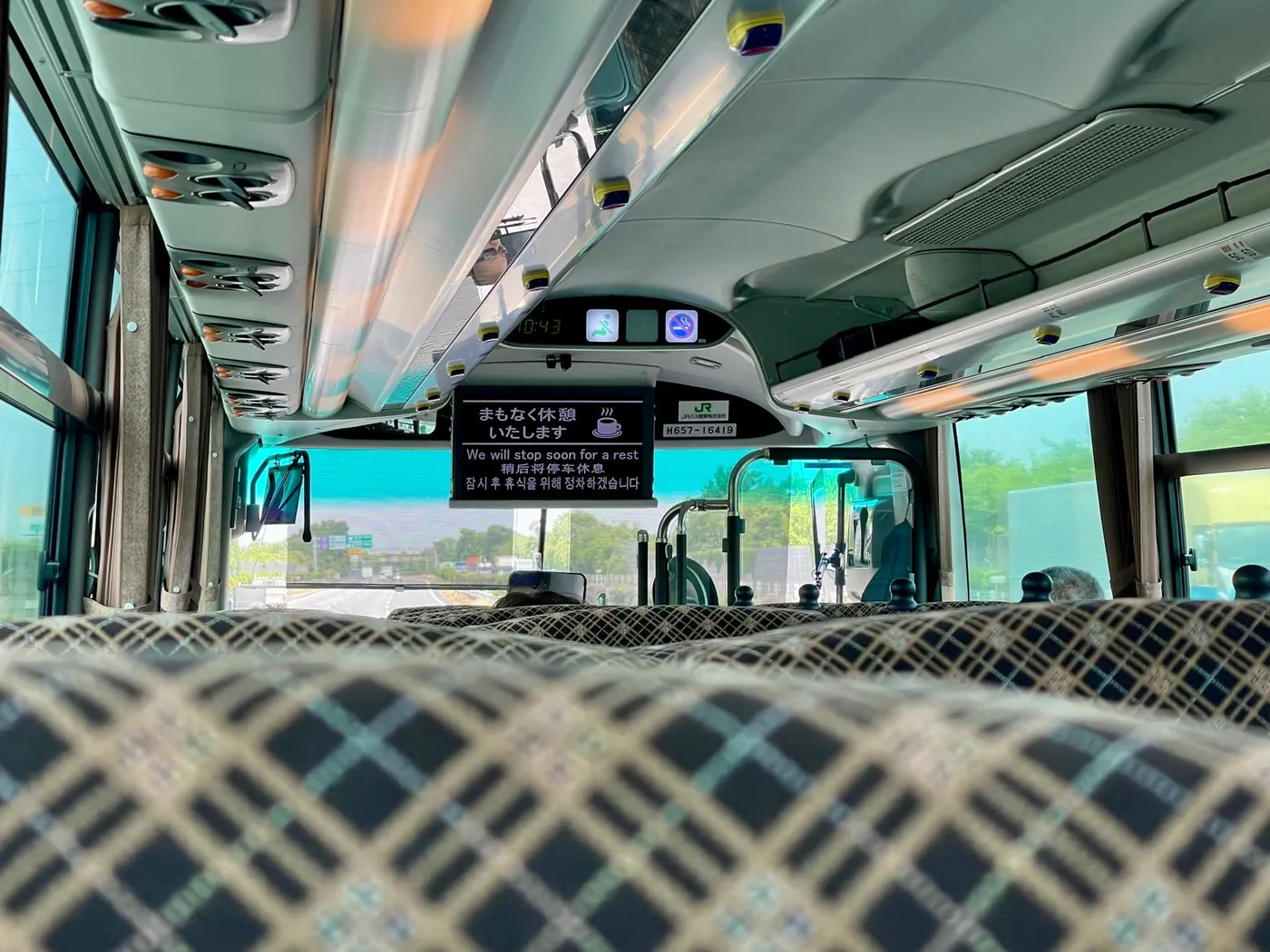
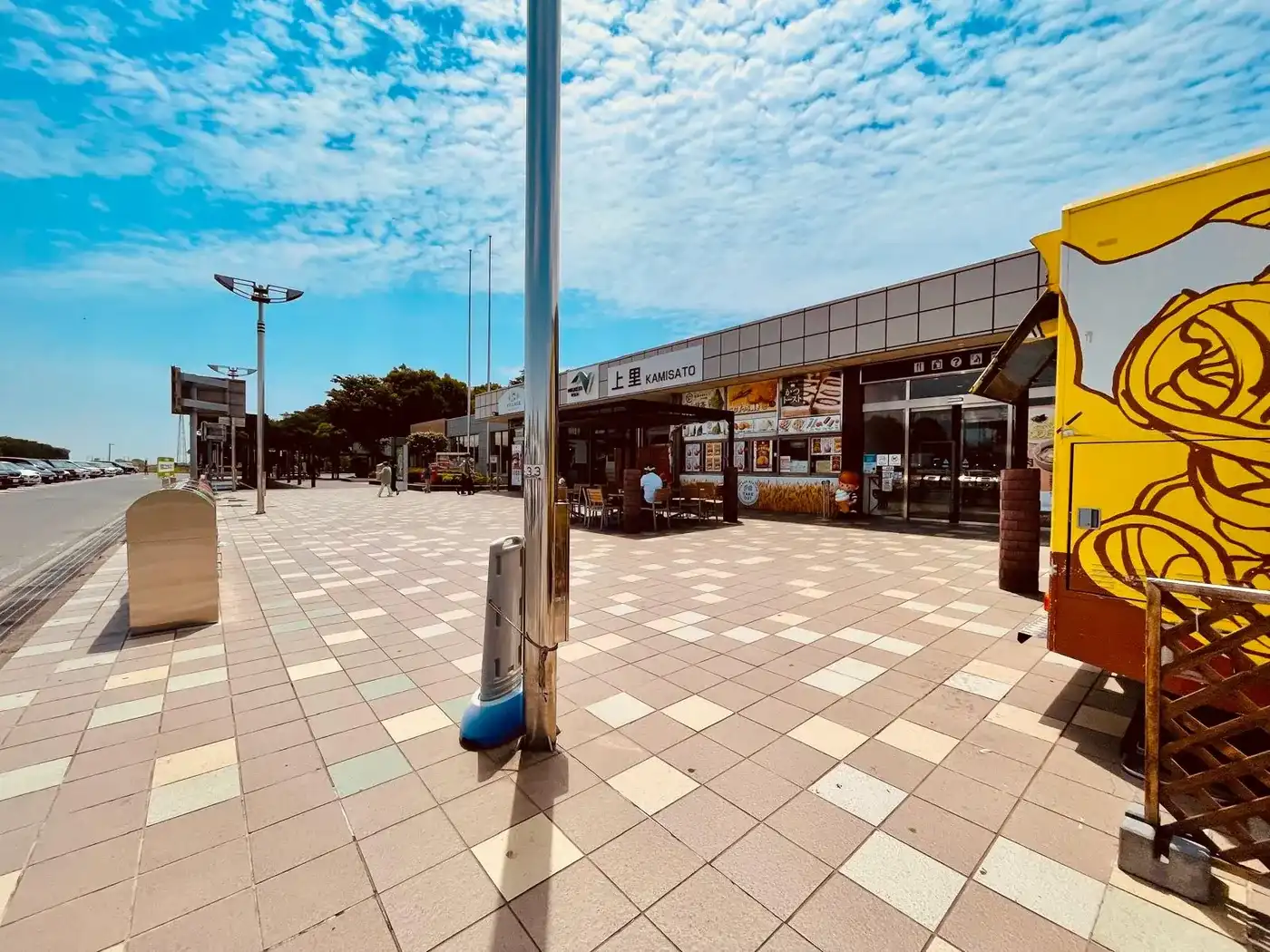
Partway through the trip, the bus stopped for a break of about 15 minutes at Kamisato Service Area. As the stop approaches, an announcement appears on the onboard monitor so you can get ready. You can get off the bus, use the restroom, and buy drinks or snacks. Since the break is limited, check the departure time and where the bus is parked before you step away. Several similar sightseeing and highway buses may be parked nearby, so when you get off, it is worth confirming the parking spot and re-departure time, and even taking a photo of the bus and its license plate on your phone as a precaution.
The rest-stop announcement shown on the onboard monitor
The rest stop at Kamisato Service Area, with shops and restrooms availableThe large parking lot at Kamisato Service Area. Check the bus’s position and re-departure time before stepping away
After the break, the scenery gradually turns to mountains
After the break, the bus set off again toward Ikaho Onsen. The scenery gradually changed from city views to mountains, and once you cross into Gunma Prefecture, it really feels like you are heading into hot spring country. The bus was fairly quiet, with most passengers settling back into their seats after the break. As you approach Ikaho Onsen, an announcement identifies the upcoming stop. Confirm that your stop is "Ikaho Onsen (Stone Steps Street)" and gather your belongings.
After the break, the bus heads back out toward Ikaho Onsen
Arrival at Ikaho Onsen (Stone Steps Street) at 11:41 am
Departing Tokyo Station at 9:10 am, the bus is scheduled to reach the Ikaho Stone Steps by 11:41 am, a trip of about 2 hours and 31 minutes. Leaving Tokyo in the morning and arriving before lunch means you can enjoy a meal on arrival and then stroll the Ikaho Stone Steps. The area around the Ikaho Stone Steps in Ikaho Onsen has restaurants, souvenir shops, footbaths, and hot spring inns, so you can start sightseeing on the very day you arrive—one of the perks of taking a morning bus.
The interior of the bus, with many seats left emptyThe onboard etiquette guide, covering rest breaks and precautions
The biggest benefit of choosing the highway bus
The biggest advantage we actually felt was having no transfers at all. Taking the Shinkansen or a conventional line means switching between train and local bus at a station such as Takasaki or Shibukawa. With the highway bus, you stow your luggage at Tokyo Station and then simply stay seated all the way to the Ikaho Stone Steps.
It is a particularly convenient option for travelers who:
are traveling with a large suitcase
want to avoid switching between trains and buses
want to go directly from Tokyo Station to Ikaho Onsen
want to leave in the morning and start sightseeing around midday
On the other hand, arrival can be delayed by traffic or weather on the highway. If you have a reservation or plans right after arriving, it is safer to build in some buffer time.
※You can check departure points, times, and seat availability all in one place on Rakuten Travel (Highway Buses).
We traveled on a weekday and found plenty of empty seats, but buses can sell out on Saturdays, Sundays, national holidays, during the autumn leaf season, and around New Year. Once your travel date is set, we recommend booking online well in advance.
Have your QR code ready to show
The mobile ticket shows a QR code that you present when boarding. To avoid relying on a network connection at the last minute, it is safer to open the screen before boarding, or take a screenshot in advance if needed.
Arrive at Tokyo Station with time to spare
Tokyo Station is large, and depending on which exit you use it can take some time to reach the Yaesu South Exit bus terminal. If it is your first time, it is best to head for the boarding bay about 20 to 30 minutes before departure.
Leave room in your schedule after arrival
Highway buses are affected by road conditions. Traffic can cause delays on weekends and during consecutive holidays, so it is safer not to pack your schedule too tightly right after arrival.
After arrival: on to a hot spring inn near the Ikaho Stone Steps
After getting off at Ikaho Onsen (Stone Steps Street), you can enjoy lunch and a stroll on your way to your lodging. Nagomigokoro No Yado Omori, where we stayed this time, is located close to the Ikaho Stone Steps.
Our stay at Nagomigokoro No Yado Omori in Ikaho Onsen
For this stay in Ikaho Onsen, we stayed at "Nagomigokoro No Yado Omori" near the Ikaho Stone Steps. Here we take a closer look, with photos from our stay, at the rooftop open-air bath 800m above sea level, the private open-air bath with its striking red umbrella, the Japanese-style rooms, and breakfast and dinner.
Summary | No transfers from Tokyo Station to the Ikaho Stone Steps
We traveled from Tokyo Station to Ikaho Onsen on JR Bus Kanto’s Joshu Yumeguri highway bus. It runs straight through to the Ikaho Stone Steps with no transfers, and the bus we rode had a restroom, USB power, and free Wi-Fi on board. This particular service departs Tokyo Station at 9:10 am and is scheduled to arrive in Ikaho Onsen at 11:41 am, so by finishing the trip in the morning you can spend the afternoon exploring the Ikaho Stone Steps and soaking in the hot springs.
For anyone who wants a clear, straightforward way to travel from Tokyo to Ikaho Onsen with luggage in tow, the highway bus is one convenient option. Note that operating times, stops, fares, and onboard facilities are subject to change, so please check the latest information on the booking site or with the operator before you travel.
FAQ | Highway bus from Tokyo Station to Ikaho Onsen
Where is the highway bus stop at Tokyo Station?
Board at the JR Highway Bus Terminal at Tokyo Station’s Yaesu South Exit. Tokyo Station is large, so if it is your first time, it is best to arrive at the terminal about 20–30 minutes before departure.
How long does the highway bus take from Tokyo Station to Ikaho Onsen?
On the Joshu Yumeguri No. 303, the bus leaves Tokyo Station at 9:10 and is scheduled to arrive at Ikaho Onsen (Stone Steps Street) at 11:41, a journey of about 2 hours and 31 minutes with no transfers.
Where can I buy tickets?
You can book online in advance and use a mobile ticket with a QR code, or, if seats remain, buy a ticket on the day from the ticket machines or counter at the JR Highway Bus Terminal at Tokyo Station’s Yaesu South Exit. Advance booking is recommended, since buses can sell out on weekends and holidays.
Is there a restroom on board?
Yes, there is a restroom at the rear of the bus, which is reassuring on a trip of about 2 hours and 30 minutes.
Can I use Wi-Fi or charge my phone on board?
Yes, you can connect to JR Bus Kanto’s free Wi-Fi, "JR_Bus_Kanto_FREE_Wi-Fi", and USB charging ports for smartphones are installed near the seats.